
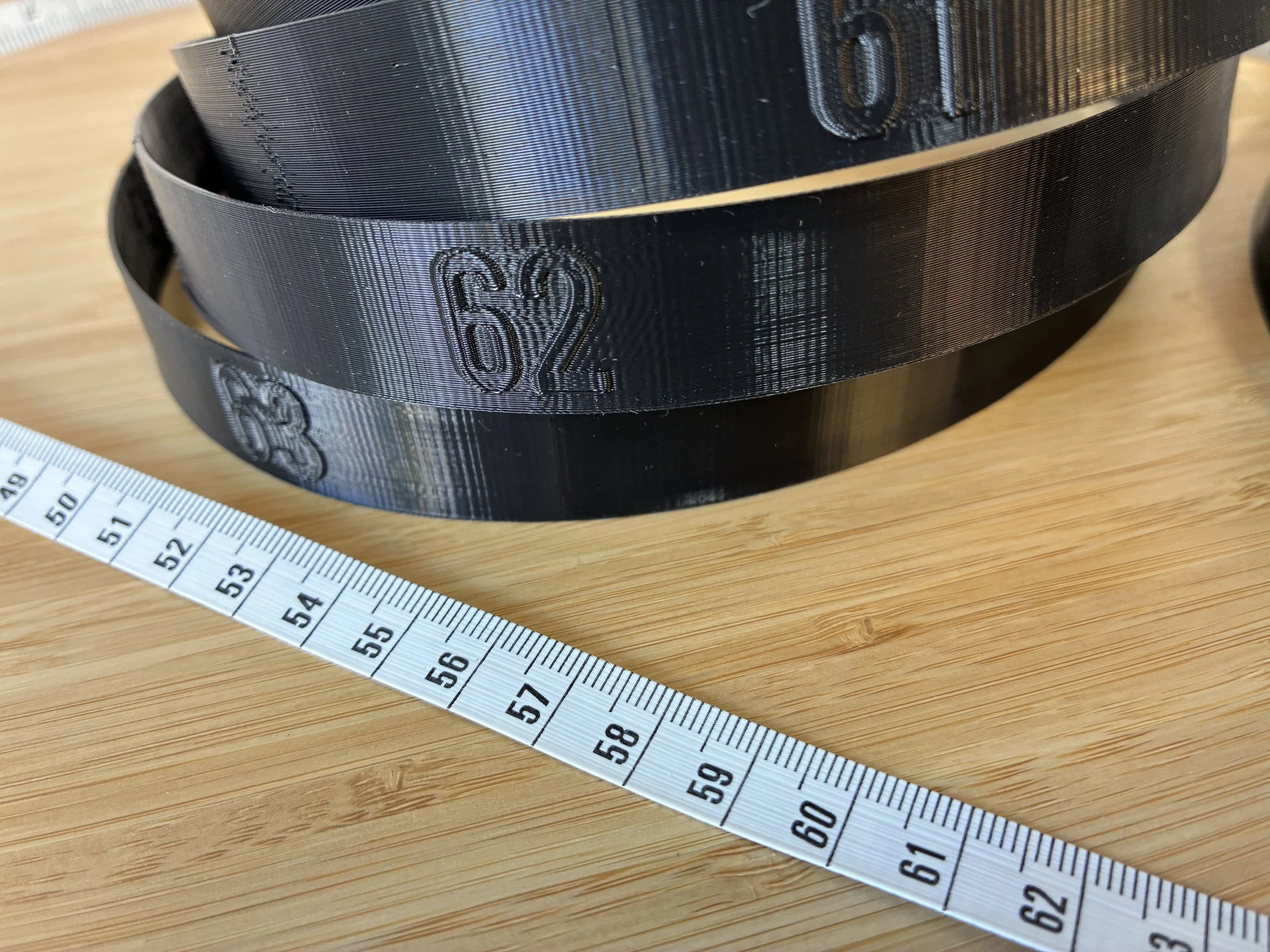
Sizing
An exact fit
Fine dress hats, much like tailored garments or well-made shoes, are crafted to an exact size and shape rather than the broad small/medium/large conventions common in general headwear. All of our ready-to-wear hats are sized using the European metric system in 1 cm increments, and our custom commissions can be crafted in half sizes when required. At present, we accommodate two head shapes: regular oval and long oval.
Whether you select a hat from our collections or commission a bespoke piece, determining your precise size and oval is the most important step in achieving a proper fit. We also encourage you to consider your wearing preferences, which can vary from style to style and may evolve over time.
If you already own hats from other makers, we recommend measuring your head rather than relying on their stated sizes, as sizing conventions vary across brands. The same applies if your current hat has been worn extensively. As leather sweatbands conform with use, the internal size may no longer reflect its original measurement.
Please refer to the guidelines below for accurately measuring your head. And if you require assistance or have any questions, we will be delighted to help. Simply reach to us through our contact form.
Traditional fit
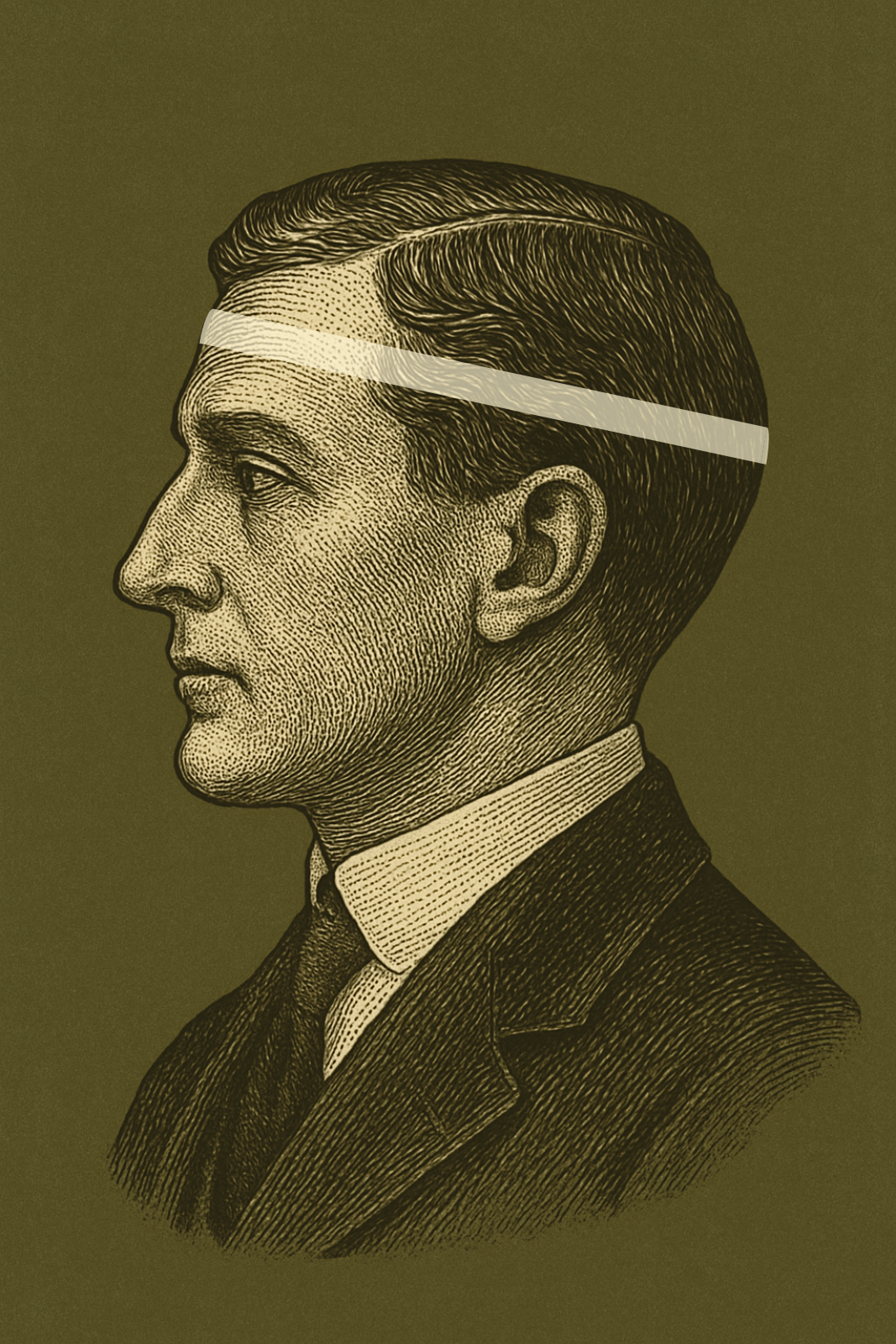
Before measuring your head, it is important to understand how a dress hat is intended to sit, as the correct fit is closely tied to your natural bone structure.
Traditionally, the base of the sweatband lies about one finger above the tops of your ears. The front of the hat rests against the foremost point where your forehead naturally protrudes (typically two fingers above the brows), while the back of the hat settles into the pronounced curve at the rear of your skull. This differs from many other forms of headwear such as toques, flat caps, or baseball caps.
More technically, the front placement corresponds to the point where the forehead begins its upward slope, and the rear placement aligns with the junction between the occipital and parietal bones (the meeting of the skull’s back and upper structures).
Depending on your head shape, the sweatband may sit with a slight incline or remain level across the head, ensuring a comfortable, balanced fit.
Wearing preferences
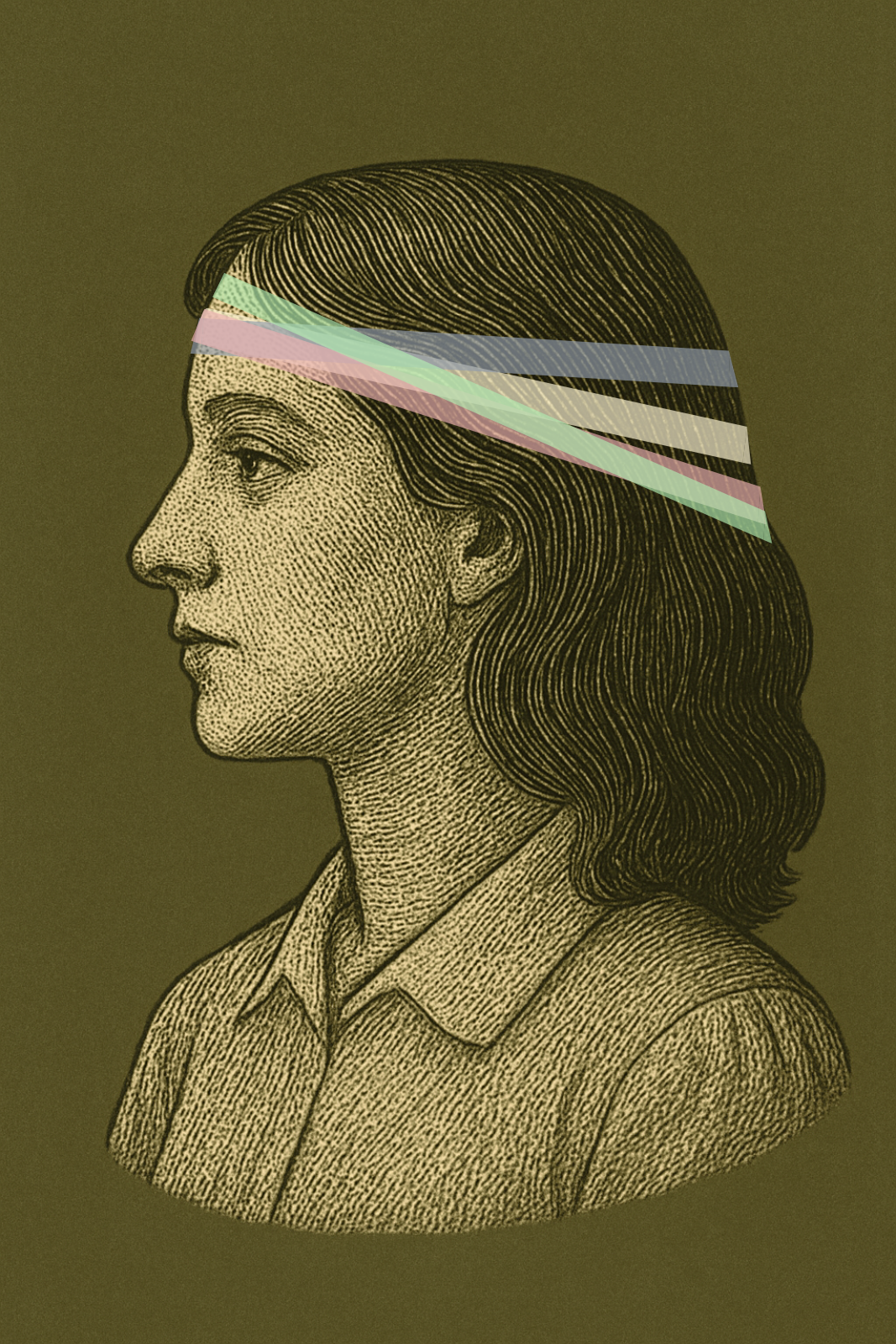
While a traditional fit generally provides the most comfortable wear, each person naturally develops their own preferred wearing style — whether that means riding the hat slightly higher or letting it sit a touch lower.
Please keep these preferences in mind as you take your measurements, as they directly influence your final hat size. As a general rule, avoid measuring too low (i.e., below the top of your ears). A measurement taken too low can cause the brim to press against both ears or the crown to touch the top of your head, leading to discomfort and increasing the risk of staining the felt with natural skin oils.
Also note that a hat worn too loose is more susceptible to being lifted by the wind on breezy days. A proper fit should feel comfortably snug, with just enough room to seat the hat more firmly when needed to withstand occasional gusts.
If you prefer to wear your hat with a slight tilt (e.g. to one side or gently angled back), we recommend adhering to the traditional fitting position, as it provides the ideal balance of comfort, security, and styling versatility.
Ovalness
Ovalness is often overlooked in most sizing guides, yet it is one of the defining elements of a truly comfortable and accurate fit. As you measure your head, pay attention not only to its circumference but also to its general shape when viewed from above. Because fine dress hats are typically crafted from pliable felt, the precise contours of your head are not as critical as they would be for stiff hats such as bowlers or top hats. However, your overall ovalness will determine whether a regular or long oval is the most suitable choice.
You may have experienced this when trying on hats that matched your measured size yet felt “off,” or slightly tight at the front and back. This usually indicates that, although the numerical size was correct, the hat’s oval did not align closely enough with the natural ovalness of your head.
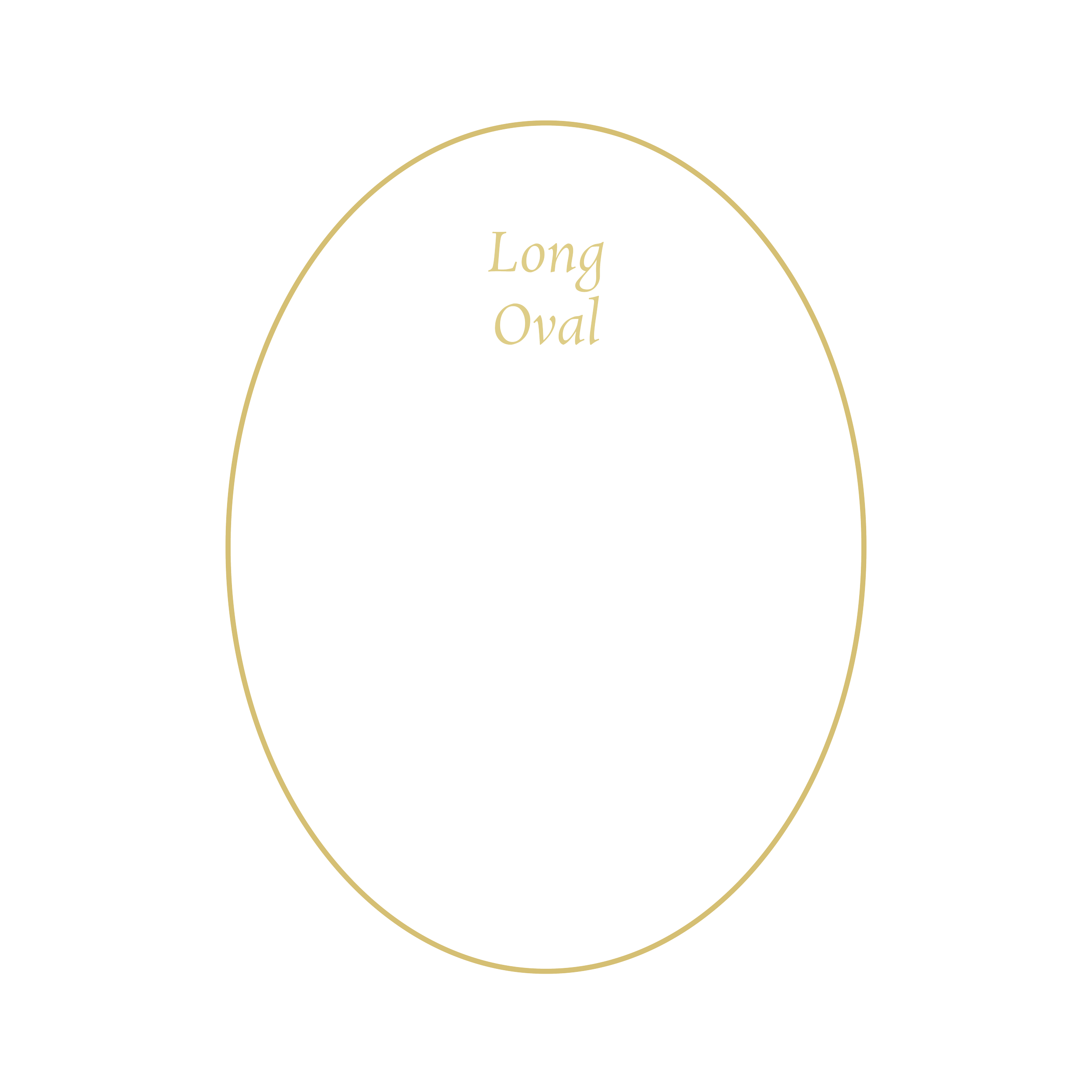
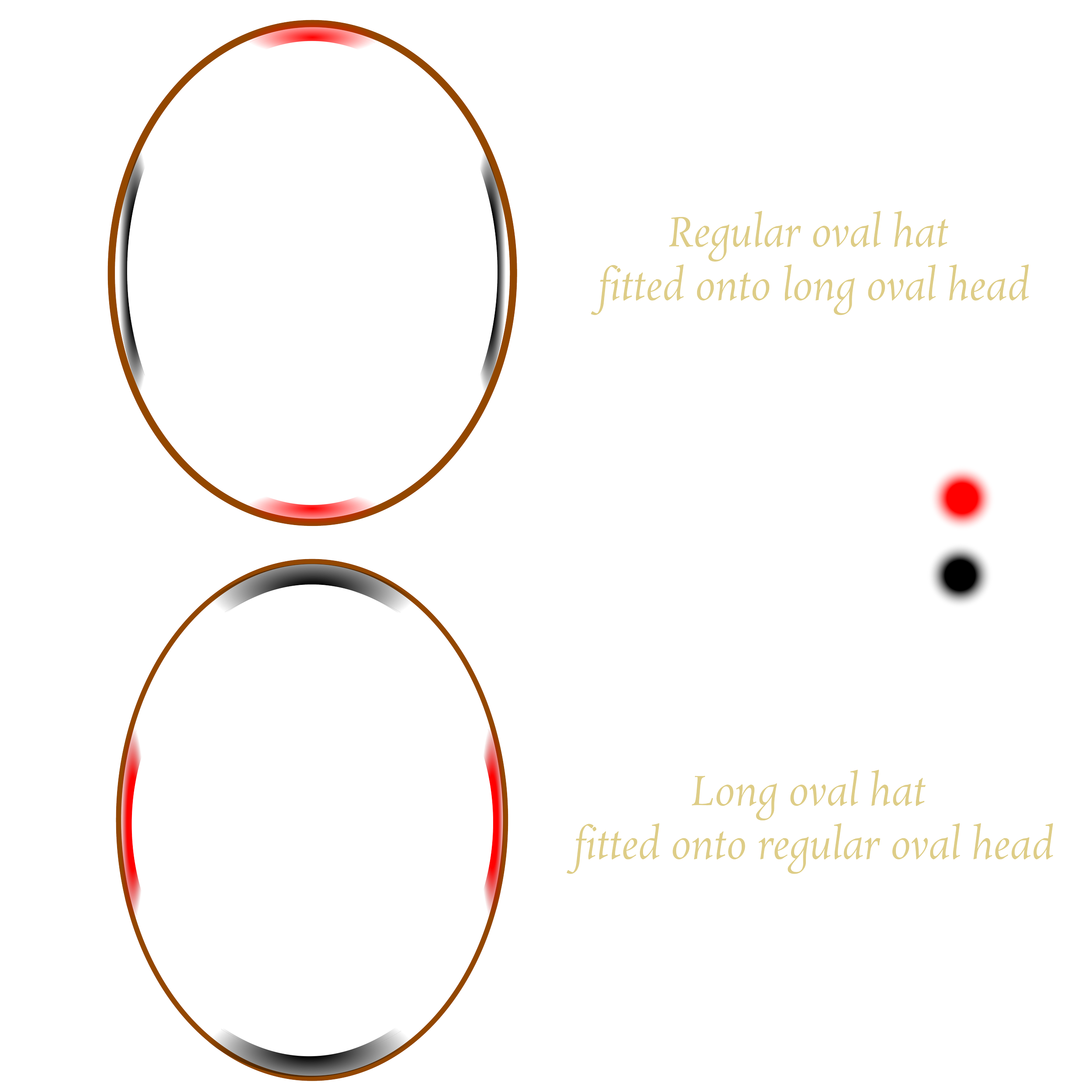
As the examples above show, fitting a hat with the wrong oval shape will inevitably create two pressure points and two corresponding gaps. Their exact position varies with both your head’s natural contours and the oval profile of the hat. A common example is the red mark that often appears on the forehead: this usually indicates that the wearer’s head is closer to a long oval shape, while the hat has been blocked on a regular oval pattern.
To compensate this, many hat shops that sell off-the-shelf hats will offer the next size up and fill the resulting gaps with foam or similar material. While expedient, this shortcut is neither indicative of fine hatmaking nor of attentive customer service. It also compromises comfort, as the sweatband may pucker and never sit correctly on the head.
Because hairstyle can also influence ovalness, please style your hair as you normally would when wearing a hat before taking any measurements. This ensures that both your size and oval reflect the true shape of your head.
How to measure your head
We recommend having someone assist you while measuring your head. Although it’s possible to do this yourself in front of a mirror, another person can help you maintain a natural, relaxed posture and ensure the measuring tape sits correctly in both position and oval.
Using a new metric measuring tape, wrap it around your head at your preferred wearing position as described earlier. Pull the tape so it sits snug but comfortable, never overly tight. Read the measurement in centimetres, and repeat this process several times until the readings are consistent within 2 mm. If your final measurement falls between sizes, round up to the next half centimetre. Please avoid converting between metric and imperial units, as this often introduces unnecessary errors.
You may also use a non-elastic string or ribbon. Wrap it around your head, mark where the ends meet, and measure that length. If you choose this method, repeat the measurement several times to ensure accuracy.
To measure ovalness, keep the measuring tape on your head and ask the other person to take a photo from above that captures the full (or nearly full) tape oval. Using a ruler or a phone measuring app, determine the approximate lengths of the major and minor axes (the longest and shortest cross-distances of the oval). Divide the larger number by the smaller one.
If the result is close to 1.25, a regular oval will fit you best.
If the ratio is above 1.33, we recommend selecting a long oval.
For this final step, you can also cut a paper strip to your measured size, tape it into a loop, wear it, and take the overhead photo that way.
Should you need assistance at any time, please contact us and we will be happy to guide you to achieve the perfect measurement. For customers located or visiting Barcelona (Spain), we offer an in-person measuring service. Please reach out to schedule an appointment.